
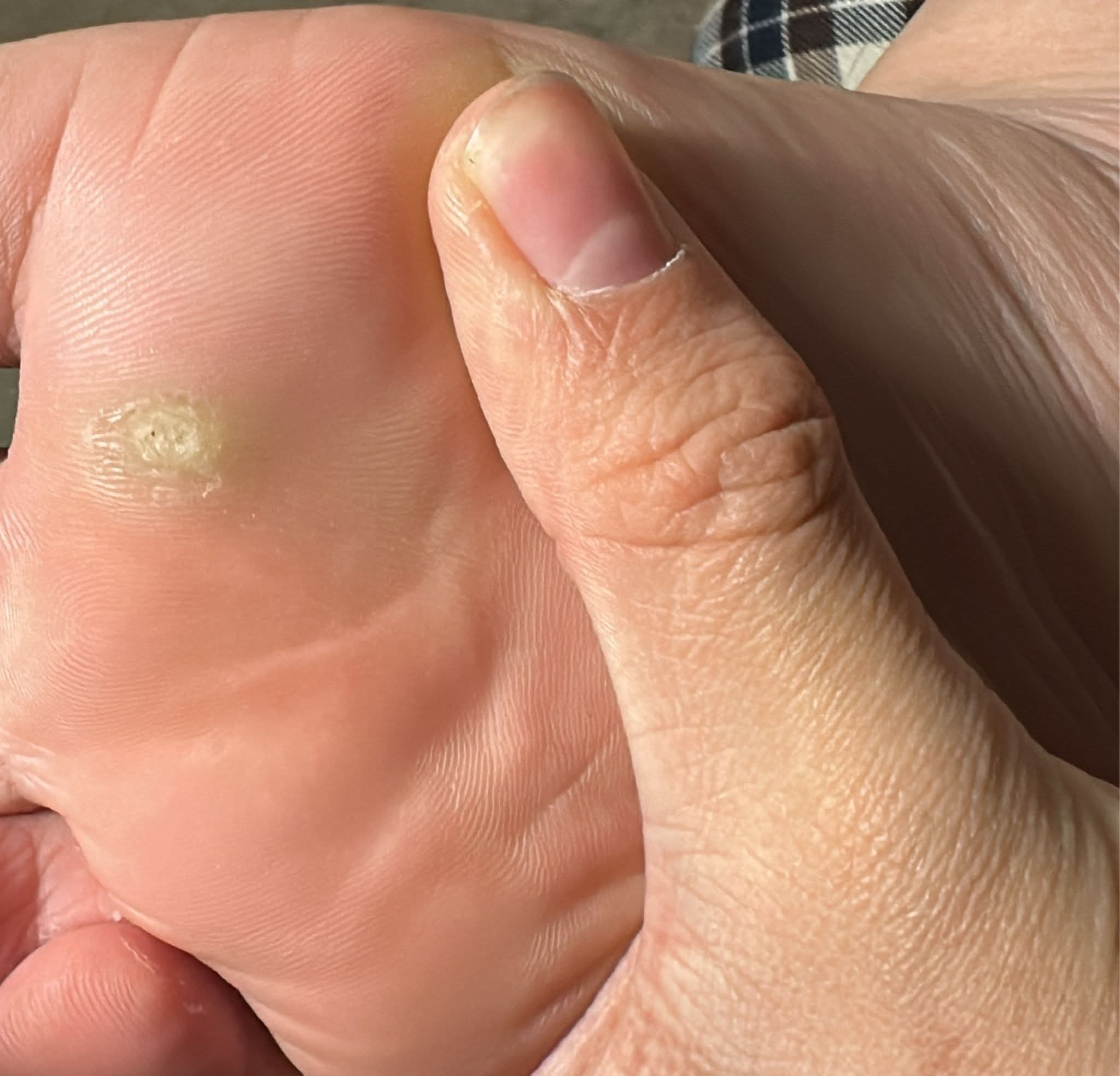
If you notice a small, rough, circular patch of thickened skin on the bottom of your foot — especially one that feels painful when walking or pressing on it — you may be dealing with either a plantar wart or a corn.
Both are common, and both can be treated effectively at home in many cases.
What It Could Be
- Plantar Wart
Plantar warts are caused by the human papillomavirus (HPV). They often:
Appear rough and grainy
Have tiny black dots in the center (clotted blood vessels)
Hurt when squeezed from the sides
Grow inward due to pressure from walking - Corn (Pressure Callus)
Corns are caused by repeated friction or pressure. They:
Feel hard in the center
Usually hurt when direct pressure is applied
Do not have black dots
Develop over bony or high-pressure areas
Looking closely at the center helps distinguish between the two.
How to Treat It at Home
Step 1: Soften the Area
Soak your foot in warm water for 10–15 minutes daily to soften thick skin.
Step 2: Gentle Exfoliation
Use a pumice stone or foot file gently after soaking.
Do NOT cut it with sharp objects.
Step 3: Apply Treatment
If it’s likely a wart:
Use over-the-counter salicylic acid treatment daily
Cover with a bandage
Be consistent for several weeks
If it’s likely a corn:
Use corn pads (non-medicated or medicated)
Reduce pressure with cushioned insoles
Wear wider, comfortable shoes
Important: Reduce Pressure
Since both conditions worsen with pressure:
Avoid tight shoes
Use padded insoles
Limit prolonged walking temporarily
When to See a Doctor
Seek medical care if:
It becomes very painful
You notice redness, swelling, or drainage
You have diabetes or circulation problems
It doesn’t improve after 3–4 weeks
A podiatrist can remove it safely using freezing (cryotherapy), trimming, or prescription treatments.
How Long Does It Take to Heal?
Corns may improve within days to weeks once pressure is relieved.
Plantar warts can take several weeks to months to fully resolve.
Consistency is key.
Final Advice
Do not try to cut or dig it out yourself. This can cause infection and worsen the condition. Gentle care, pressure relief, and proper treatment usually solve the problem safely.