
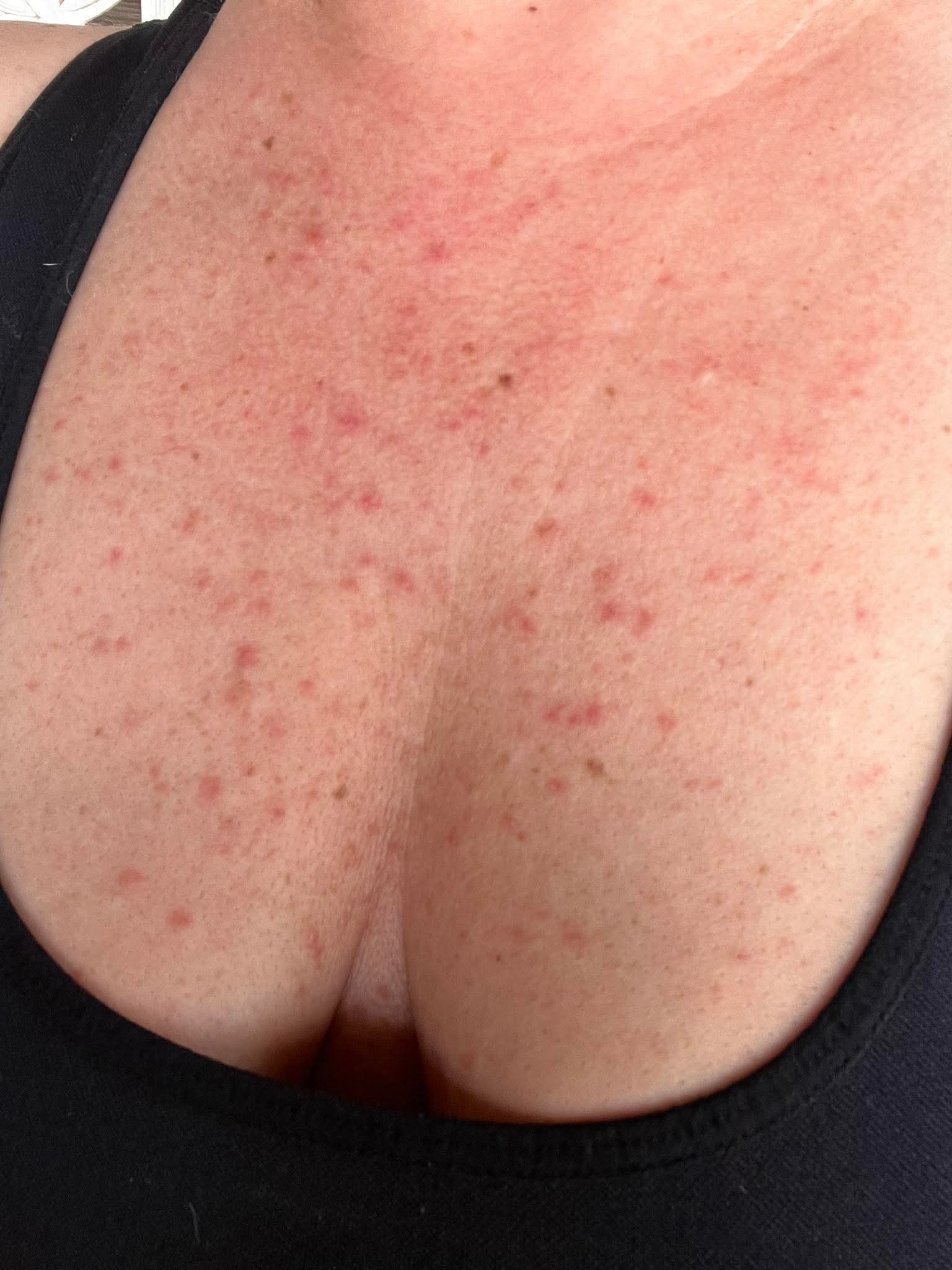
If you have a persistent rash on your chest that hasn’t improved after using antifungal wash, glycolic acid, or hydrogen peroxide, it’s important to pause and reassess. In many cases, these products can actually worsen skin irritation instead of healing it.
Let’s break down what it might be and what you can do safely.
Common Causes of a Chest Rash
- Contact Dermatitis (Skin Irritation)
This is one of the most common causes. It can be triggered by:
New soaps or body washes
Fragrance in skincare products
Laundry detergent
Sweat and tight clothing
Using glycolic acid and hydrogen peroxide can further damage the skin barrier and make irritation worse. - Fungal Rash (Tinea Versicolor)
This often appears as:
Discolored patches (lighter or darker than surrounding skin)
Mild itching
Fine scaling
Antifungal wash usually helps within 1–2 weeks. If there’s no improvement, it may not be fungal. - Folliculitis
This looks like:
Small red or white bumps
Pimples centered around hair follicles
Sometimes itchy or tender
It can be bacterial, fungal, or caused by friction and sweat. - Heat Rash
Common on the chest area, especially in warm weather. It appears as:
Tiny red bumps
Mild itching or prickling sensation
Important: Stop Harsh Treatments
Hydrogen peroxide and frequent acid use can:
Damage the skin barrier
Increase inflammation
Delay healing
The skin needs a calm, supportive environment to repair.
How to Heal It Naturally and Safely
Step 1: Simplify Your Routine
For at least 7–10 days:
Use only a gentle, fragrance-free cleanser
Stop glycolic acid and hydrogen peroxide
Avoid scrubs and exfoliation
Step 2: Restore the Skin Barrier
Apply:
Pure aloe vera gel
Zinc oxide cream
A simple fragrance-free moisturizer
These help calm inflammation and protect the skin.
Step 3: Keep the Area Dry
Wear loose, breathable cotton clothing
Shower after sweating
Pat dry (don’t rub)
Step 4: Natural Soothing Options
You may try:
Diluted apple cider vinegar (only if skin is not raw or irritated)
Oatmeal compress
Chamomile tea compress
Always patch test first.
When to See a Doctor
Seek medical advice if:
It spreads
It becomes painful
You see pus or crusting
It doesn’t improve after 2 weeks of gentle care
You may need prescription treatment depending on the cause.
Final Advice
If treatments aren’t helping, the rash may not be fungal or bacterial — it may simply be irritated skin that needs rest and barrier repair.
Sometimes doing less is the fastest way to heal.